
Filipino comfort food that earns repeat visits
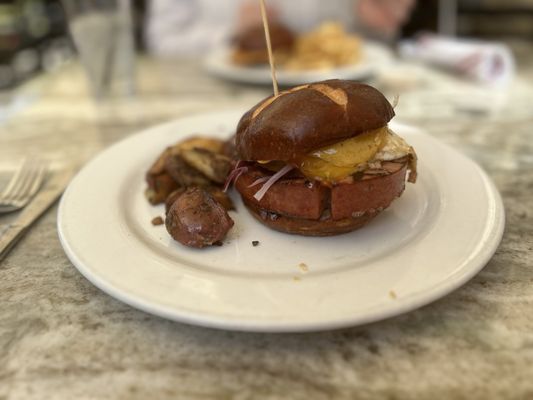
Bonifacio treats Filipino home cooking as the whole point, not a novelty, and the record backs that up across both brunch and dinner service. Lumpia opens the meal doing what it should: a crisp shell around seasoned pork, built for sharing at a table of four or more rather than a plate for one. Adobo, the dish most Americans associate with Filipino cooking without knowing its range, gets treated here as the backbone dish it is: braised in vinegar and soy until the meat gives easily, sauce dark and balanced rather than sweet. Sinigang runs the other direction, a tamarind broth pulled sour instead of savory, vegetables and protein simmered until the broth carries the whole bowl.
Together the three dishes cover the range of Filipino cooking that Columbus rarely sees on one menu: fried, braised, and soured, each one a different technique rather than variations on a theme. The room itself reads as built for groups rather than solo dining, with bar seating and communal high tables that suit a Saturday night crowd that walks in without reservations and still finds a place to sit. Weekend brunch pulls a different crowd, the kind of recommendation locals pass along to visitors rather than something found on a list. Pricing sits in the moderate range, which matters for a cuisine that in most American cities gets either buried inside a food court or marked up as a novelty; here it reads as a neighborhood dinner option, not an event.
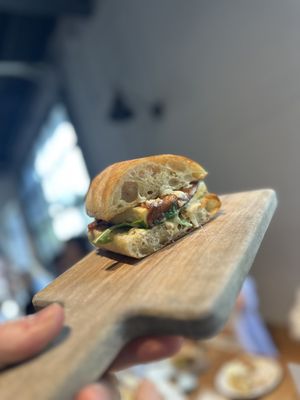
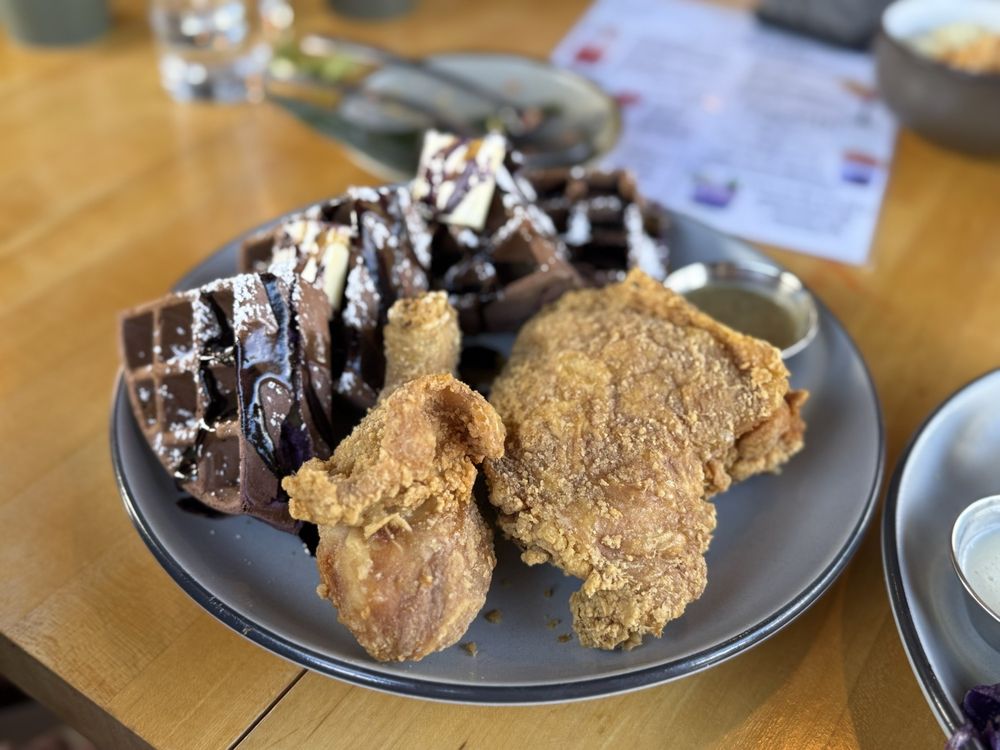
The consistency across two very different meal periods, brunch built around lighter plates and dinner built around the braises and soups, suggests a kitchen that runs the same standard regardless of the hour. For a city that has real depth in Vietnamese, Korean, and Chinese corridors but comparatively thin Filipino coverage, Bonifacio reads as the standing answer.